

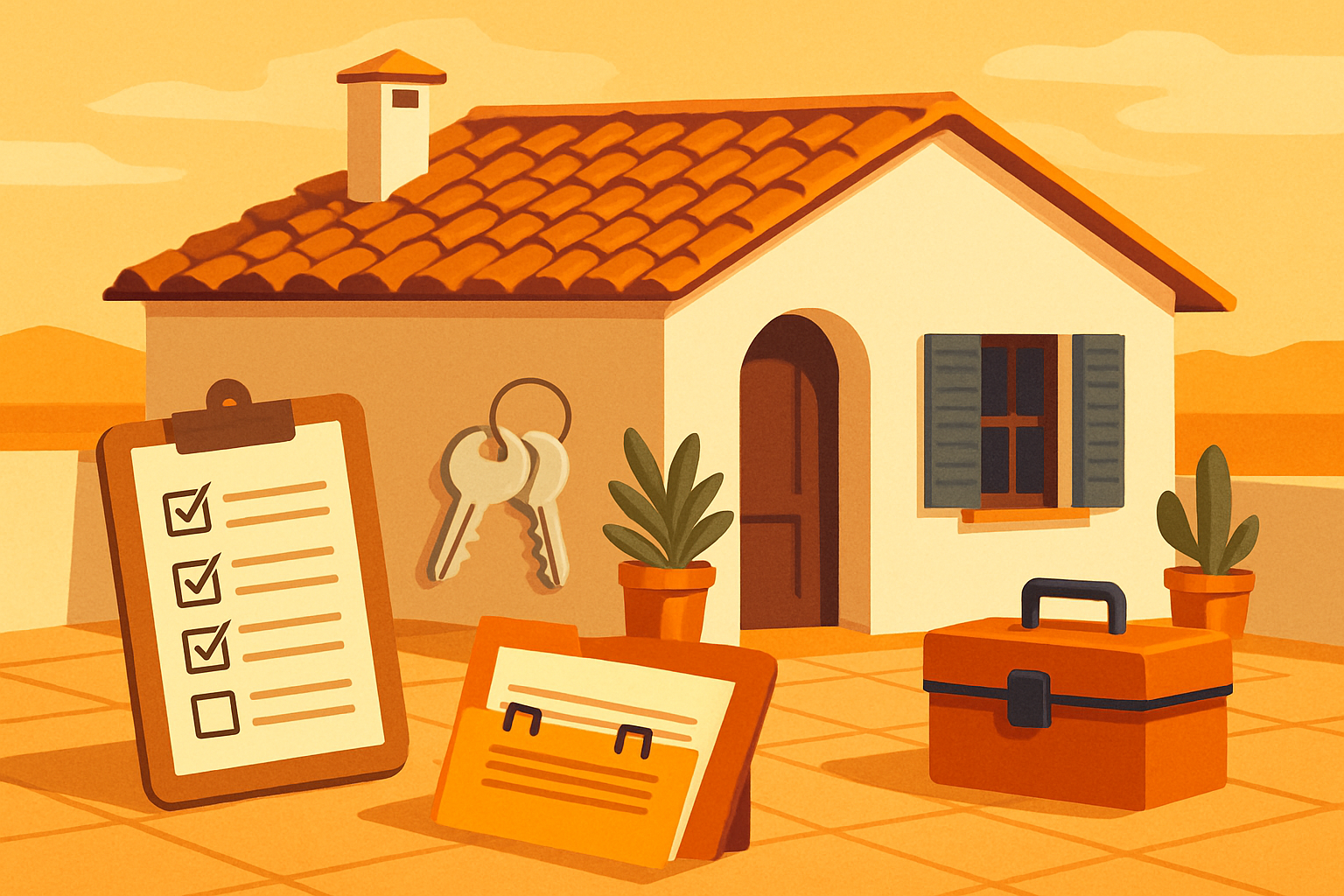
Owning a Home in Spain: How to Make Your First Year Run Smoothly
Buying a home in Spain is an important milestone, but completion day is only the beginning of ownership. The first year is when you learn how the property works, establish useful routines and discover which costs, maintenance tasks and administrative details need regular attention.
Whether your Spanish property is a permanent home, a holiday base or a future retirement plan, a calm and organised approach can make ownership considerably easier. Instead of treating the first year as a series of unexpected jobs, think of it as a practical settling-in period.
Start with a complete handover file
Before unpacking fully, create a digital and paper file for the property. Keep copies of the purchase documents, plans, guarantees, appliance instructions, utility information, insurance details and any correspondence connected with the home.
It is also useful to record the contact details for the community administrator, local tradespeople, cleaning providers and any property manager involved. If you do not live in Spain full time, this information can save valuable time when a problem needs attention while you are away.
If you are still preparing to buy, reviewing the Spanish property buying process can help you understand which documents and decisions should be organised before completion.
Learn the property’s essential systems
During your first visit as owner, identify the main water stopcock, electricity meter, fuse board, boiler or water-heating system and any air-conditioning controls. Take photographs and label switches if necessary. This is particularly helpful in larger homes or properties that are used by different family members throughout the year.
Ask a qualified professional to explain unfamiliar equipment rather than relying on guesswork. A small amount of preparation can reduce the risk of damage caused by leaving water, heating or cooling systems in the wrong setting.
Make a simple emergency checklist covering power cuts, water leaks, broken locks and severe weather. Keep essential tools, spare batteries, torches and basic cleaning materials in one accessible place.
Build a maintenance calendar
Spanish homes often benefit from a maintenance plan that reflects the climate and the property’s construction. Bright sunlight, salt air in coastal areas, heat, occasional heavy rainfall and periods of vacancy can all affect exterior surfaces, shutters, seals, terraces and outdoor equipment.
Divide tasks into three categories:
- Monthly: check for leaks, unusual smells, damp patches, blocked drains and signs of pests.
- Seasonal: inspect outdoor areas, clean filters, test alarms and check doors and windows before periods of heavier use.
- Annual: review insurance, service relevant equipment and arrange professional inspections where appropriate.
Do not wait until something fails before looking for help. Finding reliable maintenance contacts early is usually easier than searching during an urgent repair.
Inspect before you improve
New owners often want to repaint, replace furniture or redesign an outdoor area immediately. Some improvements are worthwhile, but it is sensible to spend time observing the property first. Live in the rooms at different times of day, notice where the sun falls and identify areas that become too warm, cold, noisy or difficult to clean.
Keep a running list of issues and rank each item by safety, prevention, comfort and appearance. A leaking seal or unreliable water heater deserves attention before decorative changes. This approach helps prevent spending money twice because an early design decision later needs to be altered.
For buyers who are arranging visits before completion, professional property inspection visits can form part of a wider checking process. Any inspection or technical advice should be considered alongside independent professional guidance suited to the property.
Understand recurring costs
Owning a home involves more than the purchase price. Prepare a household budget that allows for utilities, insurance, routine maintenance, repairs and any applicable property-related charges. If the home is part of a community, include regular community costs and allow for the possibility of larger shared works.
Keep invoices and payment records in one place. They can help you understand annual spending, support future administration and make it easier to compare quotations when work is needed.
It is also wise to maintain a reserve for unexpected repairs. Even a well-kept property can require attention to plumbing, electrical systems, appliances, shutters, air conditioning or exterior finishes.
Create a vacancy routine
If you will not occupy the home continuously, prepare a departure and arrival checklist. Before leaving, check taps, windows, appliances, exterior doors and climate-control settings. Consider how the property will be checked during longer absences and decide who should be contacted if a leak, break-in or storm-related problem occurs.
On returning, inspect the property before bringing in luggage. Look for water damage, tripped electrical circuits, unusual odours, insects and signs that doors or windows may not have been properly secured.
Owners considering rental use should keep the intended arrangement separate from their personal use of the home. The practical requirements for a property used by guests or tenants may differ from those for a private second home, so obtain current professional advice before making commitments.
Make the home work for everyday life
The best Spanish property is not simply attractive; it supports the way you intend to live. Improve storage gradually, choose durable furnishings for rooms that receive strong sunlight and make outdoor spaces easy to use and maintain. Small changes such as better lighting, shaded seating or practical laundry storage can have more everyday value than expensive decoration.
Try to establish local routines as well. Learn where to find essential shops, medical services, tradespeople and transport connections. A home becomes easier to enjoy when everyday tasks are predictable, especially if you are balancing life between Spain and another country.
Keep professional contacts organised
MatadorProperty.com can be one of the reference points you keep in your Spanish property file while you organise ownership, viewings or future property decisions. Keep communication clear, save important messages and ask questions whenever a process or responsibility is unclear.
If you would like to discuss your circumstances or ask about available property-related guidance, you can contact MatadorProperty.com directly. General information is useful for planning, but legal, tax, insurance and technical questions should be checked with the appropriately qualified professional.
A calmer approach to Spanish home ownership
The first year of owning a home in Spain is an opportunity to understand the property rather than rush through a long list of improvements. Build a reliable document system, learn the essential controls, schedule maintenance, budget for recurring costs and create a clear plan for periods when the home is empty.
With these habits in place, ownership becomes easier to manage and more enjoyable. The goal is not to eliminate every surprise, but to make sure that ordinary responsibilities are organised before they become urgent problems.
For more information and property guidance, visit MatadorProperty.com.